Models
Kimi K3 is live on Clusterbase
An open model with a million-token context, hosted by Clusterbase in the US with zero data retention.
Kimi K3 is now available in Cluster and to developers through Clusterbase. It is an open model with a million-token context, hosted by us in the United States. Nothing you send is kept.
That last part matters. A useful model sees the work you care about: unfinished code, internal documents, product plans, and the questions you have not shared anywhere else. With Kimi K3 on Clusterbase, those requests are processed with zero data retention. Your prompts, images, and outputs are not stored for training or kept after the request is served.
A large context window that stays practical
Kimi K3 accepts up to 1,048,576 tokens of context and can produce up to 131,072 tokens in a response. That leaves room for a real codebase, a long research thread, or a substantial set of working documents without forcing you to carve the work into artificial pieces first.
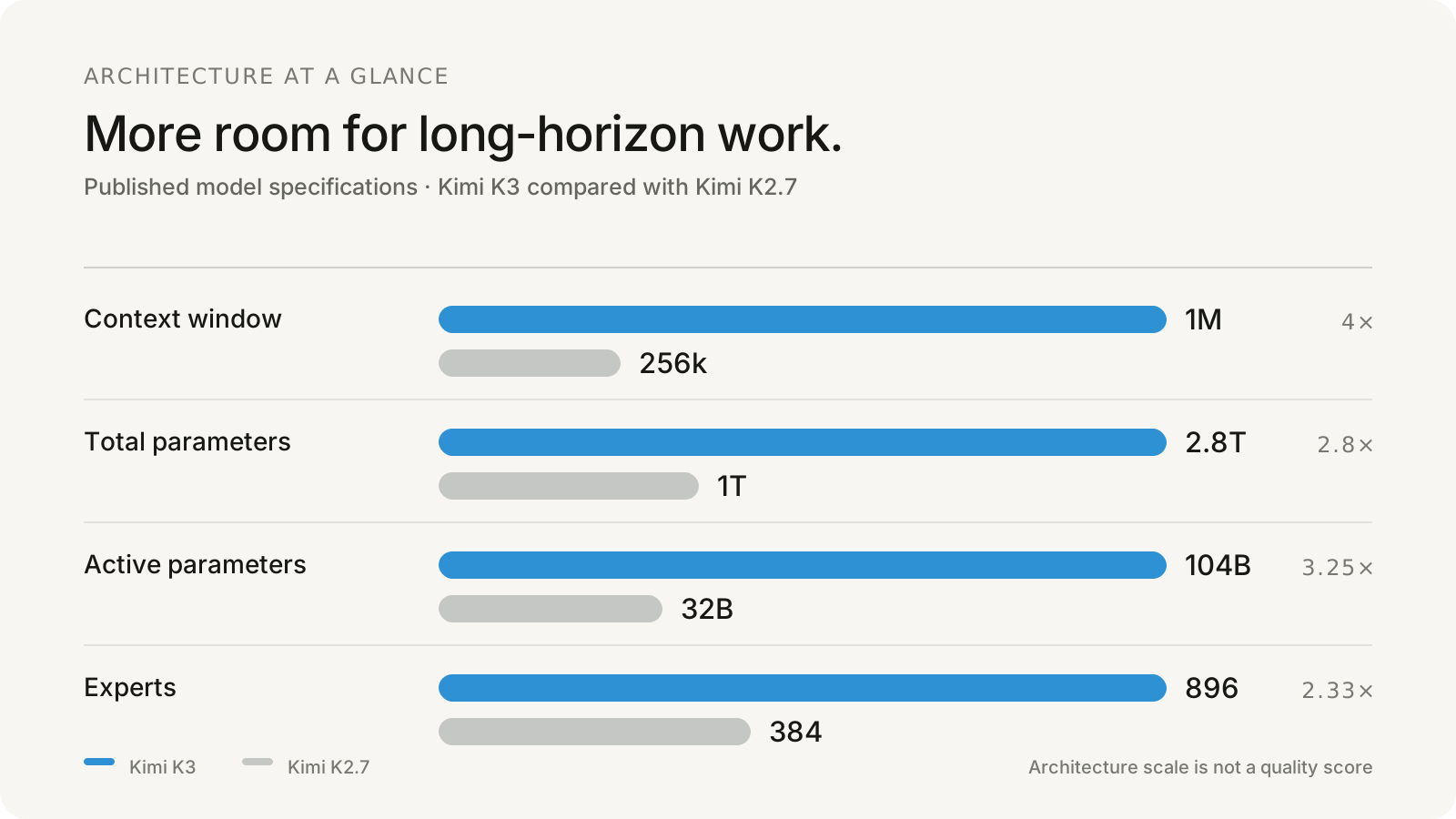
Published model specifications. Architecture scale is not itself a measure of output quality.
It can also work with images: up to 30 images per request, with a combined size under 10 MB. Kimi K3 does not accept native PDF blocks, but Clusterbase adapts PDF attachments for it automatically: reliable text pages come through as Markdown and scanned or hard-to-parse pages are rendered as images, so you can attach a PDF directly without converting it yourself first.
Reasoning is built in
Kimi K3 reasons on every request. You can choose low, high, or max
reasoning effort; Cluster uses high by default. Lower effort is useful when
latency matters. Higher effort gives the model more room for difficult coding,
analysis, and multi-step work.
The economics are as interesting as the capability
In a published evaluation of 663 agentic coding tasks, Kimi K3 stayed within a few percentage points of Opus 5 on SWE and terminal tasks, tied it on the algorithmic set, and cost between 2.0 and 4.6 times less per completed task.
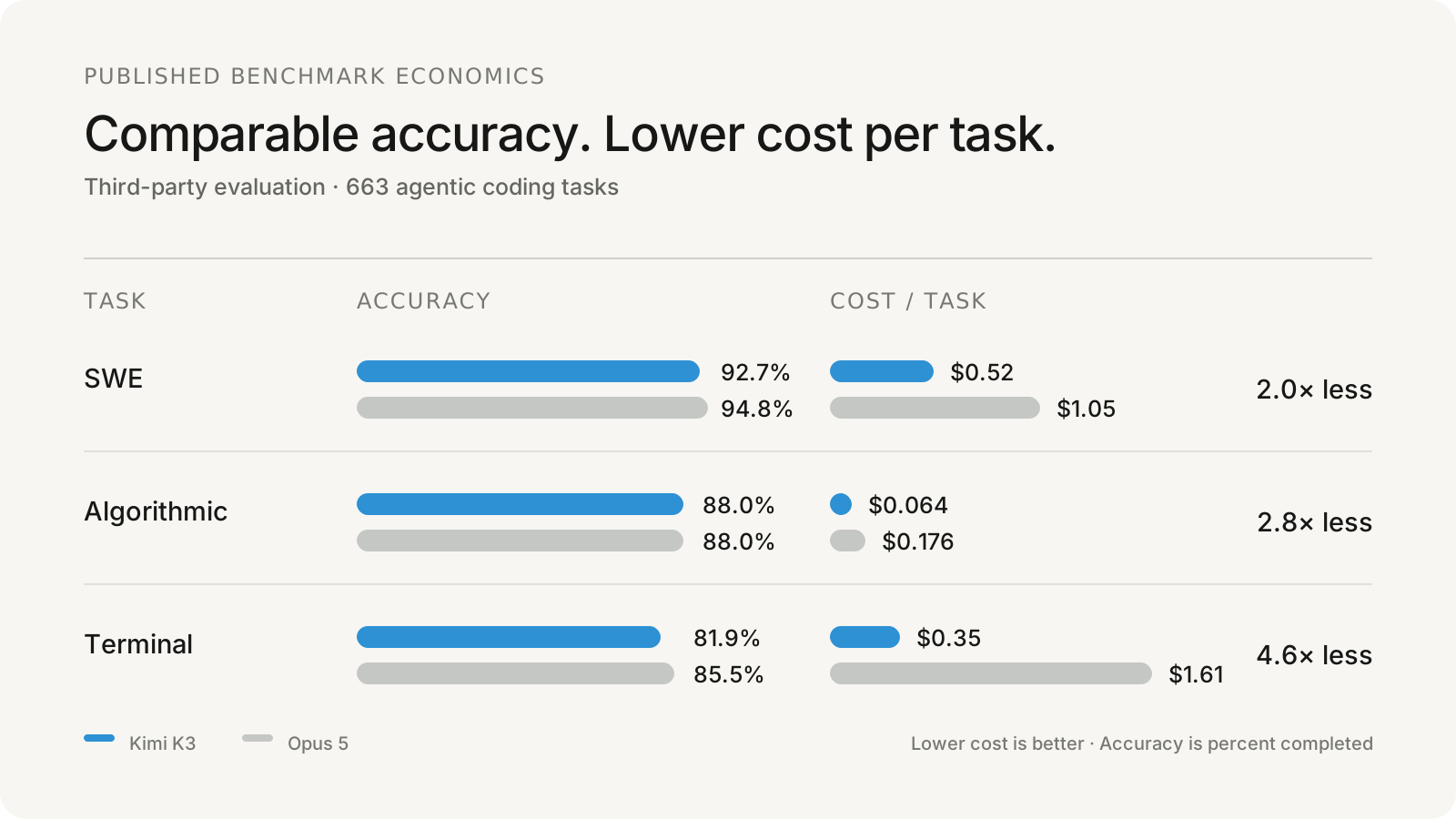
Third-party evaluation of 663 agentic coding tasks. These are not Clusterbase measurements.
Use it where you already work
In Cluster, choose Kimi from the model picker on the web or mobile. In Cluster Build, select it from the model list in your terminal.
Developers can use the same model through Clusterbase's OpenAI-compatible API
with the model ID kimi-k3. Existing OpenAI-compatible clients only need the
Clusterbase endpoint, credentials, and model name. See the
LLM Gateway API reference for the request shape and
available endpoints.
Kimi K3 does not replace the Smart or Fast model choices. It is an explicit option for the work where you want a large context window, deep reasoning, and a simple privacy boundary: it runs in the US, and nothing you send is kept.